
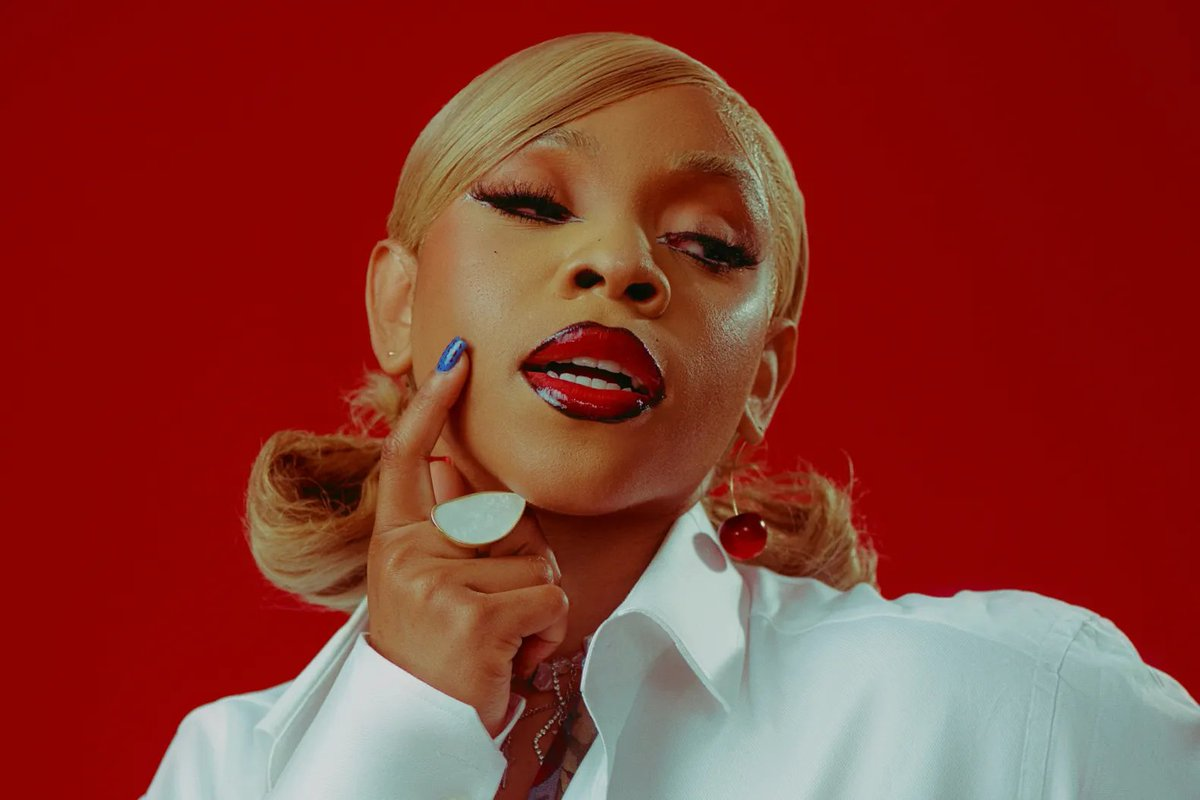
Nigerian singer Fave has sparked a fresh debate about what it really takes for a female artiste to make it in the Nigerian music industry.
And Nigerians on X have plenty to say about it.
Speaking on the Afropolitan Podcast, Fave argued that female artistes are held to a different standard from their male counterparts.
According to her, women are often judged by their bodies, clothing and perceived attractiveness before people even get around to considering their music.
“It’s harder for female artists to blow. Female artists aren’t measured by talent but by what they wear.”
She went on to describe a situation where conversations about female artistes can become less about their music and more about “people’s sexual desires or their fantasies” about them.
Fave also argued that male artistes are not subjected to the same standard.
But while some people may agree with her, Nigerians online are asking a very different question:
Do female artistes really have to sexualize themselves to blow?
And before long, one name started appearing in the argument.
Teni.
Nigerians are asking: What About Teni?
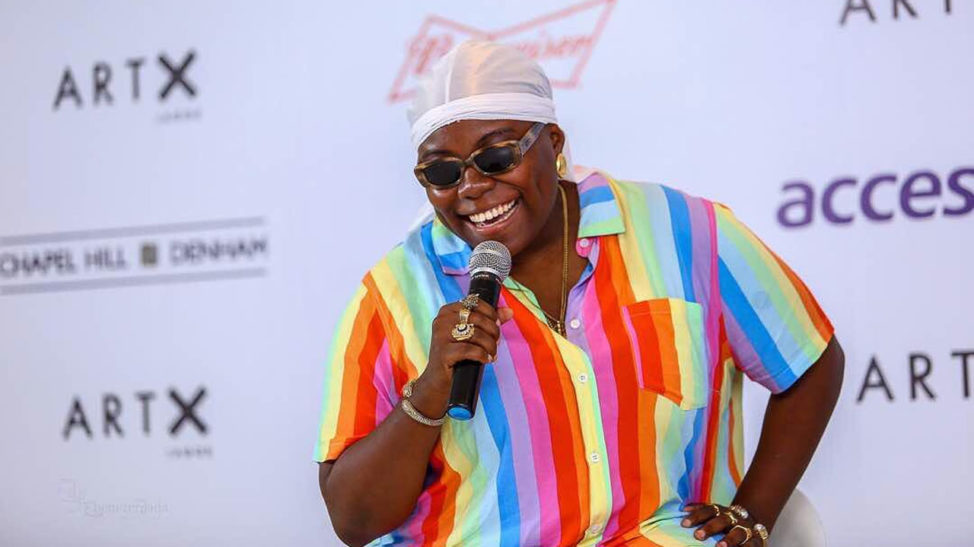
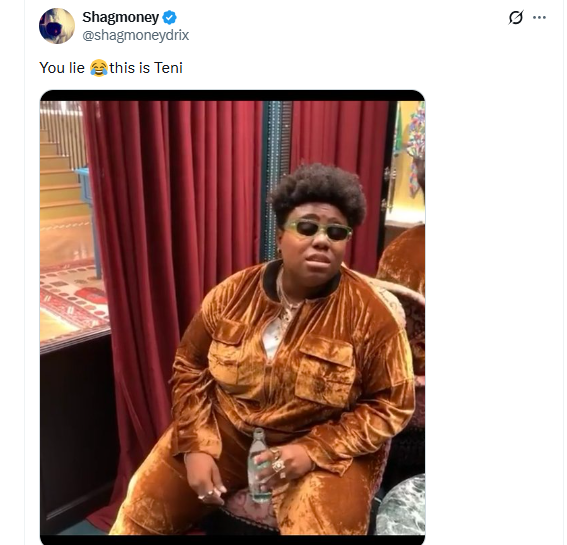
If Fave’s point is that female artistes have to rely on sex appeal to succeed, Nigerians asking about Teni have a pretty straightforward counterargument.
Teni built a hugely recognisable career without making conventional sex appeal the centre of her public image.
The oversized shirts.
The dungarees.
The playful personality.
The music.
The confidence.
And, eventually, the hits.
Teni became one of the recognisable names in Nigerian music while presenting an image that did not fit neatly into the conventional “sexy female artiste” template.
She has even previously spoken about being told to change aspects of her appearance and dress differently to look sexier.
Yet she continued to build her career in her own way.
So, for those pushing back against Fave’s comments, the question is obvious:
If Teni could blow without making sexuality the centre of her brand, why should it be considered a requirement for female artistes?
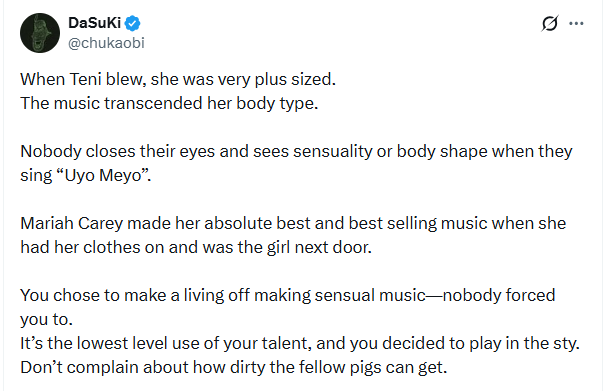



One of the reactions making this argument points to Teni as proof that there are different routes to success.
And that is probably the simplest counterargument to Fave’s statement.
But Nigerians did not stop there.
“If You Made It Your Brand, That’s On You”
Another side of the conversation is even more direct.
Some Nigerians are essentially arguing that if an artiste deliberately makes sex appeal part of her brand, she cannot then act surprised when people associate her public image with it.

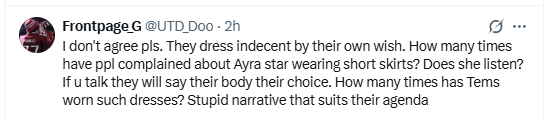
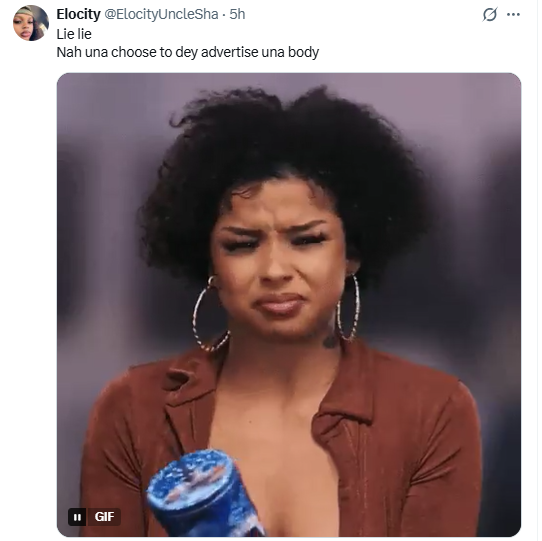
The argument is not necessarily that women should not dress however they want.
It is about branding.
An artiste can make fashion her identity.
Another can make humour her identity.
Another can make spirituality her identity.
Another can build her image around glamour and sex appeal.
Those are all choices.
And once something becomes a major part of an artiste’s public brand, audiences are naturally going to notice it.
The disagreement begins when an individual branding choice is presented as though it is a compulsory formula for every female artiste.
“But Fave Has a Point”
Of course, not everyone pushing back against Fave’s comments is necessarily saying she is completely wrong.
There is an important distinction here.
Saying female artistes are pressured to look or dress a certain way is not exactly the same as saying female artistes cannot succeed unless they sexualize themselves.
Those are two different arguments.
And Fave’s comments were actually broader than simply saying women need to show more skin.
She said female artistes are judged by what they wear and how their bodies look, and that the attention can shift from their music to how they are perceived sexually.
She also spoke about sexual advances towards female artistes and said some labels have told her they consider female artistes difficult to manage.
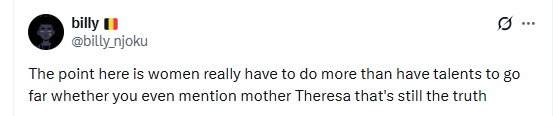
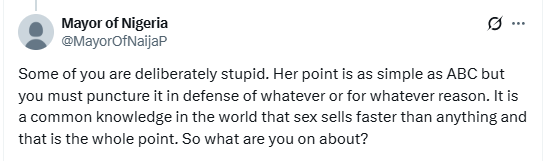

So there are Nigerians who see her comments differently.
For them, the fact that some women have succeeded without sexualising themselves does not necessarily disprove the existence of pressure.
It simply means that pressure is not an absolute rule.
And Then There Is the Bigger Question
Who exactly is creating the pressure Fave is talking about?
- Is it record labels?
- Music executives?
- Fans?
- Bloggers?
- Social media?
- Algorithms?
- Or the artistes themselves?
Maybe it is a combination of all of them.
The music industry runs on attention.
The song people talk about gets shared.
The artiste people talk about gets visibility.
And the type of content that attracts attention can eventually become part of an artiste’s marketing strategy.
That creates a complicated cycle.
An artiste may discover that a particular type of image gets attention.
She leans into it.
The audience responds.
The industry notices.
Other artistes notice.
And eventually, something that started as an individual branding decision can begin to look like an industry expectation.
“Nobody Said You Have To”
This is probably where the disagreement becomes most interesting.
One side is saying:
Female artistes are pressured to sexualize themselves.
The other side is saying:
No one is forcing you. Look at Teni.
And there is a genuine distinction between the two positions.
An artiste choosing to use sexuality as part of her brand does not automatically mean she was forced into doing so.
At the same time, the existence of women who chose a different path does not automatically mean other women have never experienced pressure to conform.
Both things can be true.
So, Is Fave Wrong?
That may actually be the wrong question.
Fave is talking about pressure and double standards.
The Nigerians bringing up Teni are talking about choice and alternative routes to success.
Teni’s career shows that a female artiste does not have to make sexual appeal the defining feature of her brand to become successful.
But that does not, by itself, settle Fave’s broader argument about how women are treated or judged in the industry.
And perhaps that is why the debate has become so interesting.
Because underneath all the arguments about clothes, bodies and branding is a much bigger question:
Does a female artiste have to play by a particular image before Nigerians will listen to her music?
Or can she simply decide what kind of artiste she wants to be and let the music do the talking?
Nigerians Have Spoken. But the Debate Is Far From Over
Fave has given her experience of the industry.
Nigerians have responded with their own experiences, opinions and, in some cases, examples of female artistes who took a completely different route.
Teni has become the obvious counterexample.
Others have pointed to Simi, Tems, Yemi Alade and more.
And some are simply saying that if an artiste chooses to make sexuality part of her brand, that choice belongs to her.
Perhaps the real issue is not whether female artistes can blow without sexualising themselves.
Clearly, some have.
The bigger question is whether they should ever feel that they have to.
And judging by the reaction to Fave’s comments, Nigerians are nowhere near finished arguing about it.
